







- Contents
- Interview with Mikko Iivonen
- It’s time to change our way of thinking
- How insulation influences heating efficiency
- Interview with Professor Christer Harryson
- The increasing use of low temperature water systems
- Interview with Professor Dr. Jarek Kurnitski
- Significant proof
- Choosing a heat emitter
- Interview with Elo Dhaene
- Benefits to the end user

- Professor Dr. Jarek Kurnitski > overall conclusions of my research show that radiators are around 15% more efficient in single-storey houses and up to 10% in multi-storey buildings.
- Professor Dr. Christer Harrysson > under the given conditions, areas with underfloor heating have, on average, a 15-25% higher level energy consumption (excluding property electricity) compared to the mean value for areas which have radiator systems.
Mikko Iivonen, Director of Technical Environment and Standards, Rettig ICC
In 2008 the R&D department of Rettig ICC started a new project. Its aim, to clarify different misconceptions that persisted in the heating industry. The Pro Radiator Programme - as we named the project - took us two years. In these two years we collected three different types of arguments: ‘In favour of radiator heating’, ‘Against radiator heating’ and ‘ In favour of competitive / other heating systems’.
In total we identified 140 claims and theories. After an initial examination we were able to amalgamate these into 41 practical research issues to test, analyze and reach conclusions. To achieve impartial and independent research results, we asked external experts for their cooperation to help us out with this immense research task. Several leading international experts, universities and research institutes worked closely together with us. The result was a tremendous amount of research data, conclusions and recommendations.
We also found that the industry was saturated with myths and illusions. Although they dominated market discussion, these ranged from irrelevant to untrue. The biggest news for us, however, was that all research results showed how efficiently and effectively radiators functioned in modern well insulated buildings. Once we had identified these results, we started a new dedicated research programme, working with the HVAC Laboratory of Helsinki University of Technology, to examine different heating systems. The accurate simulations and function comparisons of all these different heating systems confirmed that our earlier results and conclusions for radiators were correct.
Concrete data
We have already referred to some of our research results in this guide. For you, however, it’s important to realise that our conclusions are based not only on scientific theory, but also on concrete data from recently-built low energy buildings in the Nordic region. Countries like Sweden, Finland, Norway and Denmark have been leading the way in low-energy and high-insulation practices for many years. This fact, coupled with our work with academics including Prof. Leen Peeters (Brussels University - Belgium) and Prof. Dr. Dietrich Schmidt (Fraunhofer Institute – Germany), means that we can now confidently say that all our results and conclusions are valid for the vast majority of European countries. In confirmation of the theoretical savings outlined in previous chapters, a number of studies from the same period measured the efficiency of modern heating systems and compared the energy use of various heat emitters.
Academic co-operation
Both Prof. Jarek Kurnitski and Prof. Christer Harrysson share their most important findings regarding these specific case studies with you in this chapter.
All the studies we have referenced in this guide have shown that energy efficiency can be increased by at least 15% when low temperature radiator systems are used. This is a conservative estimate - some studies show that the figure can be even higher. Often the reasons for this are occupant behaviour; higher room temperatures, longer heating periods, etc.
Professor Jarek Kurnitski: Thermal mass and energy efficient heating
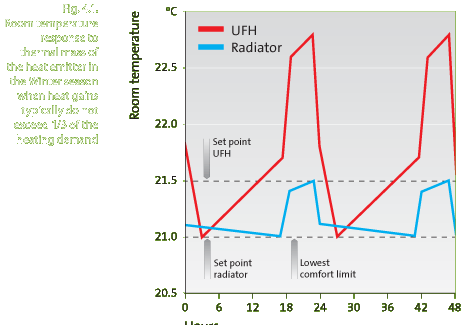
The research of Professor Jarek Kurnitski shows that the thermal mass of heat emitters has a huge influence on heating system performance. Even during the coldest Winter period, rapidly changing heat output is needed to keep room temperature in the optimal comfort range.
In case of fast-reacting radiator heating systems with small thermal mass, heat gains elevate room temperature not more than 0.5°C
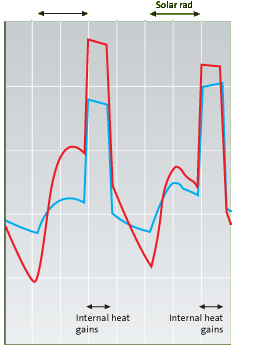
The principle of the room temperature response to heat gains and losses is shown in Fig. 4.1 where two systems are compared. In the case of fast-reacting radiator heating systems with small thermal mass, the heat gains elevate room temperature not more than 0.5°C, keeping room temperature close to the setpoint of 21°C. Traditional underfloor heating with high thermal mass fails to keep room temperature constant. Research showed that the setpoint had to be increased to 21.5°C to keep the room temperature above the lower comfort limit of 21°C. The sheer size of the heat emitter meant its output was lagging behind the heat demand, resulting in strongly fluctuating room temperature and wasted energy.
Maximising heat gains in modern buildings
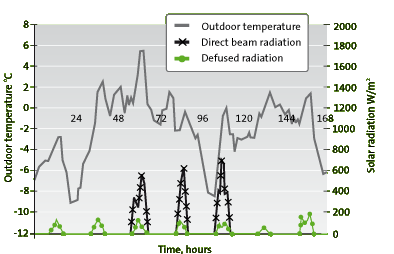
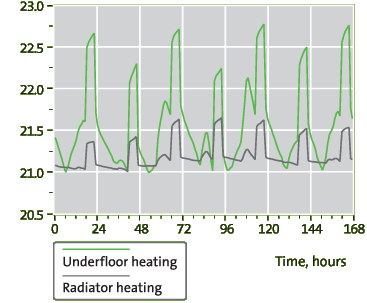
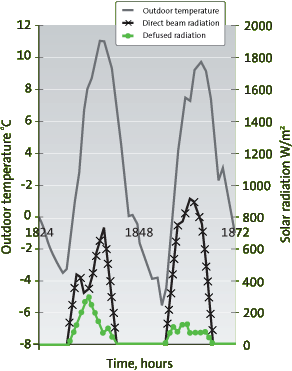
The situation shown in Fig. 4.1 is based on detailed, dynamic simulations of a modern house in Germany. Room temperature results for the first week of January are shown in Fig. 4.2. Because of the unpredictable nature of solar and internal heat gains, the performance of underfloor heating cannot be improved with predictive control strategies. Heat gains do turn off floor heating, but it still radiates heat to colder external surfaces, such as windows and external walls, for a considerable time. This overheats the room.
At night, when room temperature drops below the setpoint of 21.5°C, it takes many hours before the temperature starts to increase, despite the floor heating switching on. In fact, the research showed that room temperature continued to decrease, which resulted in the need for the elevated setpoint.
Advanced building simulation software, named IDA-ICE, was used to gain the results described above. This software has been carefully validated and has proved to provide highly accurate data in such system comparison calculations.
Fig. 4.2
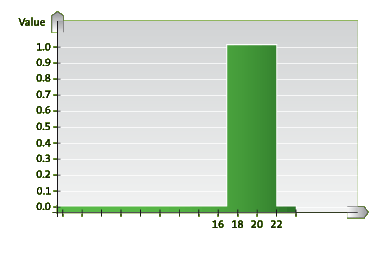
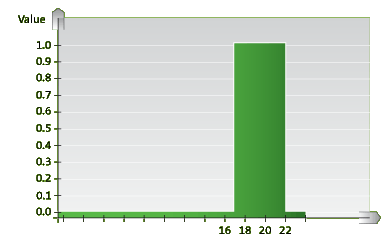
Simulated room temperatures, first week in January. Outdoor temperature, solar and internal and external heat gains are shown on the left.
In midseason, heat gains are close to heating needs, which makes it more complicated to control room temperature. Fig. 4.3 shows the performance during two days in March. Solar gains are significant and outdoor temperature fluctuates strongly. Once again, radiator heating resulted in more stable room temperature and better utilisation of heat gains.
Conclusion
Fast response to heat gains and low system losses are key elements of energy efficient heating systems. Individual temperature control in each room is also highly important, because heating needs vary strongly from room to room. Central control leads to overheating in some rooms with a consequent energy penalty. For this reason, our research recommends the use of low temperature systems to reduce system losses, and responsive heat emitters with individual/room control.
Therefore, we can also conclude that under floor heating is less effective and less energy efficient, compared to the results we measured with radiators. As a matter of fact the overall conclusions of our research showed that radiators are around 15% more efficient in single-storey houses and up to 10% in multi-storey buildings.
Fig. 4.3
Sunny days in March will increase room temperature fluctuation
Professor Dr. Christer Harrysson, Construction and Energy Ltd, Falkenberg and Örebro University
The primary aim of my research was to increase the level of knowledge about different heating solutions. In particular, underfloor heating and radiator systems were compared. The project, which was initiated by AB Kristianstadsbyggen and Peab, was funded by DESS (Delegation for Energy Supply in Southern Sweden) and SBUF (Development Fund of the Swedish Construction Industry).
Differences in living habits between technically identical single-family homes can result in variations in total energy consumption in household electricity, hot water and heating systems amounting to 10,000 kWh/annum. There are many different technical solutions, i.e. combinations of insulation, seals, heating and ventilation systems. Even the choice of technical solution can result in major differences in energy consumption and the indoor environment. In a Swedish National Board of Housing, Building and Planning study, ten inhabited, electrically heated row house areas (similar to a terrace or town house development), with 330 modest family homes, were examined using various technical solutions as well as the individualised metering of and charging for electricity and water consumption.The study found differences in total energy consumption of approximately 30% between different technical solutions. Data from Statistics Sweden, among others (including the National Board of Housing, Building and Planning study), show that the total energy consumption for households, hot water and heating systems in new, small family homes can be as much as 130 kWh/m2 per annum.
The National Board of Housing, Building and Planning study also shows that there are energy-efficient technical solutions in small terraced homes, which only require 90–100 kWh/m2 per annum, whilst also providing a good indoor environment. This is the lowest energy level currently considered to be technically and economically sustainable.
The layout and location of heating distribution systems can have a significant impact on energy consumption. Water heating with radiators is a tried and true heating distribution system, which also allows for the use of energy types other than electricity. When using underfloor heating, it should also be possible to use energy sources of lower quality (i.e. low exergy systems) more effectively, by using lower heat transfer media temperatures. For the past few years there has been heated debate on whether radiators or underfloor heating offer the greatest level of comfort as well as the most cost effectiveness and energy efficiency.
The study
The study covered residences in six blocks of the AB Kristianstadsbyggen development, with a total of 130 flats and various technical solutions. The blocks have between 12 and 62 flats in each. The individual flats are mainly single storey structures within each block, built on a slab foundation, with underlying insulation. Of the six areas, four have underfloor heating and two have radiator systems. The residences have exhaust or inlet/exhaust ventilation.
The areas were compared to one another, using gathered data and written information and calculated values. Metered energy and water consumption were adjusted according to annual figures, residential floor area, insulation standard, exhaust ventilation, heat recovery (if any), indoor temperature, water consumption, distribution and regulation losses, placement of the electric boiler/control unit, individual or collective metering, culvert losses, heating of auxiliary buildings (if any), and property electricity.
In summary, under the given conditions, areas 3-6 with underfloor heating have, on average, a 15-25% higher energy consumption level (excluding property electricity) compared to the mean value for areas 1 and 2, which have radiator systems.